

This guide explains how to perform Umrah from Pakistan in 2026 - from Umrah visa requirements and Ihram rules to the step-by-step ritual guide, packing checklist, monthly weather data for Makkah and Madinah, and health tips for older pilgrims and children. Read it once before you book and arrive prepared.
Before we explain how to perform Umrah from Pakistan step by step, it helps to understand why Umrah holds such significance. Every Muslim carries a religious dream - to stand before the Kaaba, to follow the blessed Sunnah of the Messenger of Allah, Prophet Muhammad (PBUH), and to feel the peace that only the Holy Land can give. In Islam, Umrah is considered sunnah mu'akkadah and the rewards attached to it are significant.
Allah, the Almighty, say in the Quran: "And complete Hajj and Umrah for Allah (Surah Al-Baqarah (2), Ayat 196 (2:196)." When you perform Umrah, you become a guest of Allah.Standing before the Kaaba, your sins are forgiven and your faith grows stronger.Understanding the significance of the Holy Land builds a longing in your heart to return again and again.
The Messenger of Allah, The Prophet Muhammad (PBUH) said: " Alternate between Hajj and Umrah; for those two remove poverty and sins just as the bellows removes filth from iron, gold, and silver and there is no reward for Al-Hajj Al-Mabrur except for Paradise" - Jami at Tirmidhi 810
The Messenger of Allah, The Prophet Muhammad (PBUH) said: " Umrah is an expiation for the sins committed between it and the previous Umrah" - Sahih al-Bukhari 1773
The Messenger of Allah, The Prophet Muhammad (PBUH) said: " Perform `Umra in the month of Ramadan, (as it is equivalent to Hajj or Hajj with me (in reward)" - Sahih al-Bukhari 1863
And about every step of Tawaf: "Whoever performs Tawaf around this House seven times and he keeps track of it, then it is as if he freed a slave. One foot is not put down, nor another raised except that Allah removes a sin from him and records a good merit for him" - Jami` at-Tirmidhi 959"
Umrah consists of four acts. Each one is essential. Skipping or performing any one of them incorrectly makes the Umrah incomplete.
Entering the sacred state of intention and wearing the prescribed garments before crossing the Miqat.
Circling the Kaaba seven times in a counter-clockwise direction, starting and ending at the Black Stone.
Walking seven times between the hills of Safa and Marwah, finishing at Marwah.
Shaving or trimming the hair. This final act completes the Umrah and ends the state of Ihram.
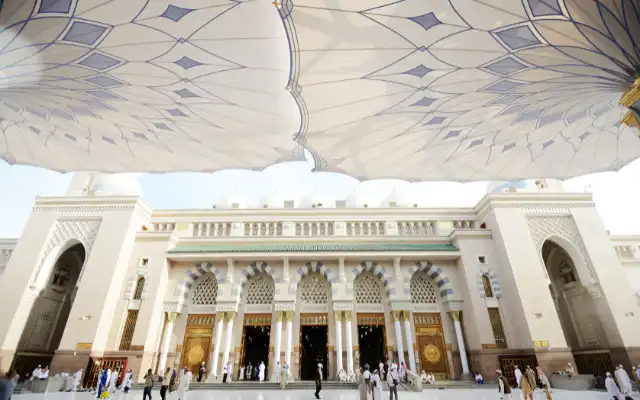 Prophet Mosque Medina
Saudi Arabia issues a dedicated Umrah e-visa for Pakistani pilgrims. Specifically, it is separate from a tourist or work visa and is processed through licensed travel agents. The visa stays valid for three months, which gives you enough room to pick your travel dates. Here is everything you need to know before applying.
When you book your Umrah package through Dynamic Tours, we will handle the entire visa process. You will submit the required documents to us. We will prepare and submit the e-visa application with the Saudi embassy on your behalf. Most visas are issued within two to five working days.
Passport, CNIC copy, recent photo, and vaccination certificate handed to Dynamic Tours office
We prepare and submit your e-visa application with confirmed hotel and flight details
Typically 2–5 working days. We monitor and follow up on your behalf throughout
Visa printout, hotel confirmation voucher, flight ticket, and transport confirmation collected from our office
Can I perform Umrah on a tourist visa? Yes. If you already hold a valid Saudi work, tourism, or visit visa, you can perform Umrah on it without obtaining a separate Umrah visa. If you do not have a Saudi visa, your travel agent must apply for the dedicated Umrah e-visa.
Below is a clear, step-by-step guide that explains exactly what to do from the moment you enter Ihram to the moment your Umrah is complete. Tawaf and Sa'i together cover roughly 3.5 to 5 kilometres of walking - prepare physically before you go.
Before any ritual, strengthen your body with daily walks and your heart with sincere intention (niyyah). This preparation makes the physical demands of Tawaf and Sa'i much easier.
Umrah follows a fixed order: Ihram → Tawaf → Sa'i → Halq/Taqsir. Knowing this sequence helps you stay calm and focused inside the Haram.
Each stage has its own duas, actions, and spiritual meaning. The step-by-step guide below explains exactly what to do at every moment.
Spiritually: Renew your intention (niyyah) purely for the sake of Allah. Seek forgiveness from family and friends. Resolve any conflicts before you leave. Learn the basic duas and zikar for Tawaf and Sa'i, you do not need to memorise everything, but knowing a few key phrases makes the experience much richer. Read about the life of the Messenger of Allah, Prophet Muhammad (PBUH) and the history of Makkah and Madinah. When you understand the significance of the places you are visiting, the emotions hit differently.
Practically: Confirm your passport has at least six months of validity beyond your travel dates. Keep printed and digital copies of your passport, visa, hotel booking, and flight ticket. For women: pack loose, modest clothing and an abaya ( discuss with scholars for guidelines). For men: prepare your two Ihram cloths and simple sandals in advance( discuss with scholars for guidelines).
Ihram is both a physical dress code and a spiritual state of intention. However, you must enter Ihram before crossing the Miqat - the boundary around Makkah designated for pilgrims.
If flying directly to Jeddah from Pakistan: Enter Ihram on the plane before reaching the Miqat. The airline crew will make an announcement. Do not miss this.
If staying in Madinah first: Enter Ihram at Dhu'l-Hulaifah (also called Abyar Ali).
How to enter Ihram: Take a shower (ghusl) if possible. Men should wear two white unstitched cloths, one around the waist (izar) and one over the shoulders (rida) along with simple sandals that do not cover the ankles. Women should wear normal modest clothing that covers the full body except the face and hands. Pray two rak'ahs. Then make your Umrah niyyah and recite the Talbiyah:
"Labbaik, Allahumma Labbaik, Labbaik La Sharika laka Labbaik. Inn-al-Hamda Wan-Ni'mata Laka wal-Mulk, La Sharika Lak. Sahih al-Bukhari 5915."
Comprehend: "Here I am, O Allah, here I am. Here I am, You have no partner, here I am. All praise, grace and sovereignty belong to You only. You have no partner."
Recite the Talbiyah frequently from this point until you begin Tawaf.
Upon arriving in Makkah, keep your focus on humility and gratitude as you enter the Grand Mosque. Enter the mosque with your right foot and say the dua for entering a mosque: "Allahummaftah li abwaba rahmatik - Sunan Ibn Majah 772" - O Allah, open for me the gates of Your mercy.
When you first see the Kaaba. This is one of the most emotional and precious moments of your life. Make personal duas. This is a moment where your heart speaks directly to Allah.
First, Tawaf is one of the pillars of Umrah. It consists of walking seven times counter-clockwise around the Kaaba, starting and ending at the Black Stone (Hajar al-Aswad).
At the start: Move towards the Black Stone. If you can safely reach it, touch or kiss it. Due to heavy crowds, most scholars say it is enough to raise your hand towards it and say "Bismillah, Allahu Akbar" at the start of each circuit. Men should uncover the right shoulder (idtiba) by placing the upper Ihram cloth under the right arm and over the left shoulder.
During Tawaf: Walk calmly and respectfully. Do not push others. Men may walk briskly with short steps (raml) in the first three circuits if space allows - this is a Sunnah. You may recite any duas, Quran verses, or zikar you know. There is no single fixed dua for each round. Between the Yemeni Corner and the Black Stone, it is Sunnah to recite: "Rabbana atina fid-dunya hasanah, wa fil-akhirati hasanah, waqina 'adhaban-nar." Quran, Surah Al-Baqarah (2), Ayah 201
After Tawaf: Men cover both shoulders again. Pray two rak'ahs behind Maqam Ibrahim if possible, or anywhere in the mosque. Then drink Zamzam water, the messenger of Allah, the Prophet Muhammad (PBUH) said "The water of Zamzam is for whatever it is drunk for" - Sunan Ibn Majah 3062 - . Drink Zamzam with the intention of healing, acceptance, or whatever you need from Allah.
Next, after Tawaf, proceed to Safa and Marwah - two hills located within Masjid al-Haram. Sa'i follows the Sunnah of Hajar (may Allah be pleased with her), who ran between these hills searching for water for her son Ismail (peace be upon him). Allah answered her call, and the blessed water of Zamzam sprang from the earth.
How to perform Sa'i: Go to Safa and face the Kaaba. Recite the Quranic verse about Safa and Marwah if you know it, and make dua. Walk from Safa to Marwah, this is one lap. Then walk from Marwah back to Safa, this is the next lap. You must complete seven laps, finishing at Marwah. Men may lightly jog between the two green markers (indicated by green lights on the walls) in the middle section. Continue to make zhikr and personal duas throughout Sa'i. This is a powerful time for prayer, use it well.
After completing Sa'i, the final act of Umrah is shaving or trimming the hair. This marks the end of your Ihram and the completion of your Umrah.
Men: Shaving the entire head (Halq) is generally considered better and carries greater reward. Trimming (Taqsir) is also permitted but if you trim, make sure hair is cut from all around the head, not just one spot. Women: Trim a small portion, about a fingertip's length, from the end of the hair. Shaving the head is not required for women.
Once this is done, your state of Ihram ends and your Umrah is complete, Insha'Allah. You may now change into normal clothes and resume all regular activities. May Allah accept your Umrah and grant you its full reward.
Knowing how to perform Umrah from Pakistan also means knowing what to pack. Unlike packing for a regular holiday, packing for Umrah requires specific items for worship, for the Saudi climate, and for health. This checklist covers everything. Use it when preparing your suitcase one week before departure.
Pro tip from our team: Pack light. You will buy things in Makkah and Madinah- prayer mats, attar (perfume), dates, and gifts. Leave room in your suitcase. Buy souvenirs from shops a few streets away from the Haram, prices drop significantly once you move away from the main area. You can carry Zamzam water on the return trip, usually up to 5 litres per person depending on your airline. Confirm with your airline before packing.
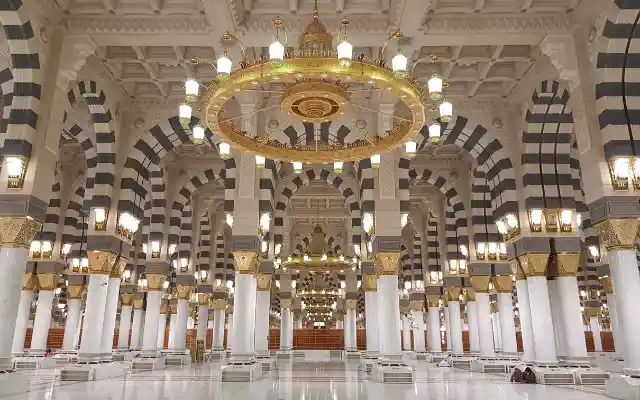 Interior of Prophet Mosque Medina
Choosing the right season is a key part of planning how to perform Umrah from Pakistan. One of the biggest planning mistakes Pakistani pilgrims make is ignoring the weather. Makkah and Madinah sit in the Arabian Desert. Summer temperatures regularly exceed 45°C. For outdoor worship - particularly the walk between Safa and Marwah - during summer month can make your journey physically difficult. The data below is based on 2025 averages.
Cool, comfortable temperatures for walking. Perfect for families, older pilgrims, and children. November to February is the peak season — book hotels and flights early as availability is limited.
Hotel prices drop significantly. Flights are easier to find. The weather is warm but manageable if you plan outdoor worship for early morning or after sunset. Good choice for working professionals on a fixed budget.
Temperatures exceed 45°C in Makkah. Outdoor walking becomes very difficult for older pilgrims and children. If you must travel in summer, stay indoors during midday, carry ORS sachets at all times, and plan all Haram visits for before 9 AM or after 9 PM.
| Month | High °C | Low °C | Comfort |
|---|---|---|---|
| January | 31 | 18 | Excellent |
| February | 33 | 19 | Excellent |
| March | 36 | 22 | Good |
| April | 39 | 25 | Moderate |
| May | 43 | 28 | Hot |
| June | 45 | 30 | Very Hot |
| July | 45 | 30 | Very Hot |
| August | 44 | 30 | Very Hot |
| September | 43 | 28 | Hot |
| October | 40 | 26 | Good |
| November | 36 | 22 | Very Good |
| December | 32 | 19 | Excellent |
| Month | High °C | Low °C | Comfort |
|---|---|---|---|
| January | 23 | 10 | Excellent |
| February | 25 | 12 | Excellent |
| March | 29 | 15 | Good |
| April | 33 | 19 | Moderate |
| May | 38 | 23 | Hot |
| June | 41 | 26 | Very Hot |
| July | 42 | 27 | Very Hot |
| August | 41 | 27 | Very Hot |
| September | 39 | 25 | Hot |
| October | 35 | 21 | Good |
| November | 29 | 16 | Very Good |
| December | 24 | 11 | Excellent |
Tawaf and Sa'i together cover approximately 3.5 to 5 kilometres of walking. Add the time zone change, the desert heat, and the crowded conditions, and your body will face demands it is not used to. These tips cover preparation before you travel and staying well throughout your stay.
Book a wheelchair in advance at the Haram - available for a small fee. Choose a hotel within 500 metres of the Haram to minimise walking. Travel during November to February only. Keep all medicines in hand luggage, never in checked bags. Always travel with a companion who knows your full medical history.
Keep children hydrated at all times - children dehydrate faster than adults. Avoid the Haram during peak prayer times (Fajr, Jumu'ah, Isha) when crowds are heaviest. Dress children in bright, easy-to-spot colours. Carry snacks and small activities for waiting periods.
Carry a blood glucose meter in your hand luggage at all times. Keep insulin and testing supplies with you, never in checked bags. Eat light and regularly. Carry glucose tablets for emergencies. Your doctor's report must clearly state your insulin requirements and dosage.
Heavy meals in hot weather make you sluggish and increase dehydration risk. Stick to dates, fruits, bread, rice, and light curries. Eat at halal-certified restaurants near your hotel. Avoid street food if your stomach is sensitive. Always drink bottled water, avoid from taps.
These tips complement our guide on how to perform Umrah from Pakistan and cover real world experiences. If this is your first Umrah from Pakistan, the experience can feel overwhelming. Here are practical tips from seasoned pilgrims and our travel team that will save you time, money, and stress on the ground.
The currency in Saudi Arabia is the Saudi Riyal (SAR). Exchange a small amount in Lahore before you leave and the rest after you arrive - Makkah and Madinah exchange rates are often similar or better. ATMs accept Pakistani debit and credit cards. Carry 500–1,000 SAR in cash for small purchases, taxis, and tips.
Buy a local SIM at Jeddah or Madinah airport - STC, Mobily, and Zain are the three main providers. A tourist SIM with data costs 50–100 SAR and lasts your full trip. Data is essential for the Nusuk app, Google Maps, and WhatsApp. Alternatively, activate international roaming on Jazz, Zong, Telenor, or Ufone before departure.
Saudi Arabia now requires all Umrah pilgrims to book their Umrah time slot through the Nusuk app before entering the Haram for Tawaf. Download it before you leave Pakistan. Our team walks you through setup as part of your package briefing. Perform your Umrah within the time slot assigned to you.
Arrive at least three-four hours before departure. Have your passport, Umrah visa, and flight ticket ready at check-in. Immigration and security for Umrah flights can be slow - be patient. There is a prayer area inside the departure lounge. If you have not entered Ihram before reaching the airport, do so before boarding the aircraft.
Follow signs for the Hajj and Umrah terminal (Terminal 1 for most Umrah flights from Pakistan). If you booked through Dynamic Tours, our representative meets you in the arrivals hall with your name on a sign. Immigration lines can be long - stay calm and keep your documents handy. Luggage carts are free.
Do not overpack, you will not need half of what you think you need. Avoid trying to do everything on day one; rest between prayers instead. Many first-time pilgrims forget the duas they planned once they are standing in front of the Kaaba, write yours before you leave Pakistan. Stay patient in the crowds and let others go ahead.
The shops near the Haram sell abayas, thobes, prayer mats, attar, Zamzam cups and gifts. Prices are highest directly around the Haram entrance. Move two or three streets away and prices drop significantly. Buy locally rather than carrying everything from Pakistan, it saves luggage space for Zamzam on the way back.
Saudi Arabia requires modest dress, especially in the holy cities. Men should wear long trousers and a shirt near the Haram. Women should wear an abaya in public, you can buy one in Makkah from 40–100 SAR. Always cover your hair in public. Carry a light shawl, the air conditioning inside the Haram and Prophet's Mosque can be cold.
Makkah and Madinah are blessed lands, cities where the Messenger of Allah, Prophet Muhammad (PBUH) lived, prayed, and where many of his noble Companions (may Allah be pleased with them) rest. Visiting these sacred sites strengthens one's connection to Islamic. In Makkah:Jabal al-Noor and the Cave of Hira, Jabal Thawr, and the plains of Mina and Arafat. In Madinah:Al-Masjid an-Nabawi and Jannat al-Baqi, the Battlefield of Uhud, Masjid Quba (the first mosque built in Islam) and Masjid al-Qiblatain.
Generally speaking, the actual rituals, Ihram, Tawaf, Sa'i, and Halq, take between three and six hours depending on crowd levels. Most Pakistani pilgrims stay for 7 , 10 to 14 days to also pray at the Haram, visit holy sites in Makkah and Madinah, and perform additional worship. Seven days is the minimum for a comfortable trip.
Fortunately, Saudi Arabia no longer requires a male mahram for female Umrah pilgrims. Pakistani women can travel for Umrah as individuals or in a group without a male guardian. This rule has been in effect since the Saudi government updated its Umrah visa policy.
Typically, April, May, and the weeks immediately after Hajj, usually September and October, tend to have the lowest hotel prices and most flight availability. Hotel prices during these months can be 20–50% lower than the November to February peak season. Flights are also easier to book without long waits.
The Umrah e-visa is typically valid for three months from the date of issue. You must enter Saudi Arabia and complete your Umrah within this validity period. Saudi government policy can change, so confirm the current validity with your travel agent at the time of booking.
The Nusuk app is Saudi Arabia's official platform. Therefore, you must use it to book your Umrah time slot. Additionally, download it before you leave Pakistan. Finally, our team walks you through setup as part of your package briefing.
The meningitis, polio ACWY vaccine is required for all Umrah pilgrims from Pakistan. It must be administered at least two weeks before travel. A flu vaccine is strongly recommended. Check the Saudi Ministry of Health website before your trip for the latest vaccination requirements, as these can change between seasons.
Yes. If you already hold a valid Saudi tourist, work, or visit visa, you can perform Umrah without a separate Umrah visa. Simply enter the Miqat in a state of Ihram and proceed with the rituals. If you do not have a Saudi visa, you must obtain the dedicated Umrah e-visa through a licensed travel agent like Dynamic Tours.
Most airlines allow up to 5 litres of Zamzam water per person on the return trip, sealed in approved packaging. Some carriers include this in your standard luggage allowance; others charge as excess baggage. Confirm the rule with your specific airline before departure. Our team advises you on this before you travel.
For men, Ihram requires two white, unstitched cloths - one around the waist and one over the shoulders - with simple sandals that do not cover the ankles. For women, Ihram is any normal, modest clothing that covers the full body except the face and hands. No specific colour is required for women. Most Pakistani women wear their regular abaya and headscarf.
You are not required to, but experienced pilgrims strongly recommend it. When you are standing in front of the Kaaba for the first time, the emotion of the moment often causes people to forget everything they had planned to ask for. Write your duas before you leave Pakistan, for yourself, your family, and anyone you want to pray for. Carry the list with you.
You now have a complete understanding of how to perform Umrah from Pakistan, let Dynamic Tours handle every detail - visa, return flights from Lahore, hotel in Makkah and Madinah, airport transfers, Ziarat trips, and 24/7 support throughout. Premium packages from PKR 250,000. IATA, TAAP, PATO and LCCI registered.